About the Ministry
Heritage, Stewardship, Sacred Service
A plain-language account of who we are, how we govern ourselves, and what we stand for.
Character
Ecclesiastical, Tribal, Cultural, Stewardship
The Ministry is, at its core, an institution of conscience. It is ecclesiastical in its sacred standards and ministerial offices; tribal in its recognition of kinship, lineage, and councils of elders; cultural in its preservation of heritage and identity; and stewardship-minded in its care of trusts, lands, and inter-generational resources. The Ministry is non-denominational and welcomes families of every background of good faith.
Governance
Councils and Offices
The Ministry governs itself through constituted councils that deliberate and proclaim, and through administrative offices that carry out the daily work. Authority is held in trust, never in private possession. A clear separation of powers preserves the integrity of doctrine, the impartiality of records, and the dignity of counsel.
Office of Records
The Registrar of the Institution
The Office of Records is the official registrar of the Ministry. It receives petitions, verifies enrollment, issues credentials under seal, and maintains the registers, archives, and minutes of council. Every act of standing within the Ministry is recorded here.
Heritage
A Private Trust Heritage
The Ministry operates within a private trust heritage administered in honor and equity. This heritage provides the institutional continuity by which councils, offices, and records persist across generations. Internal trust instruments are private; the Ministry's public posture is one of stewardship, not disclosure.
Posture
Honor and Equity
The Ministry stands in honor and equity. It is not posed against any people, government, or faith. It serves families, communities, and lineages who wish to walk under its sacred standards and contribute to its work of restoration and continuity.
Motto
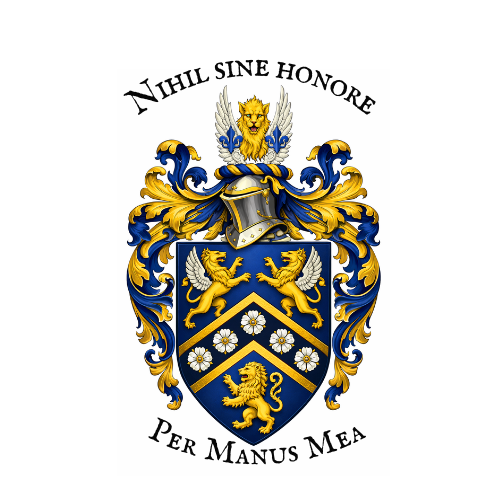
Nihil Sine Honore
“Nothing without honor.” The motto of the Ministry is the measure of every act undertaken in its name. By honor we deliberate; by honor we record; by honor we minister; and by honor alone do we stand.
Legal Foundation
Authority & Framework
The Dominium Aeternum Ministry operates under a layered legal authority rooted in both international and domestic law. Internationally, the Ministry invokes the United Nations Declaration on the Rights of Indigenous Peoples (UNDRIP), adopted by the UN General Assembly in 2007. UNDRIP Articles 3 through 5 affirm the right of indigenous peoples to self-determination, autonomy in internal affairs, and the maintenance of distinct political, legal, and cultural institutions. Articles 33 through 35 affirm the right to determine identity, membership, institutional structures, customs, spirituality, and the responsibilities of individuals to their communities. Domestically, the Ministry is protected by the First Amendment to the Constitution for the united States of America (free exercise of religion), the Religious Freedom Restoration Act (42 U.S.C. §2000bb), and operates as a bona fide religious organization under 26 U.S.C. §508(c)(1)(A). Together, these authorities form the foundation upon which the Ministry exercises ecclesiastical self-governance, issues credentials, conducts sacred rites, and administers its institutional affairs.